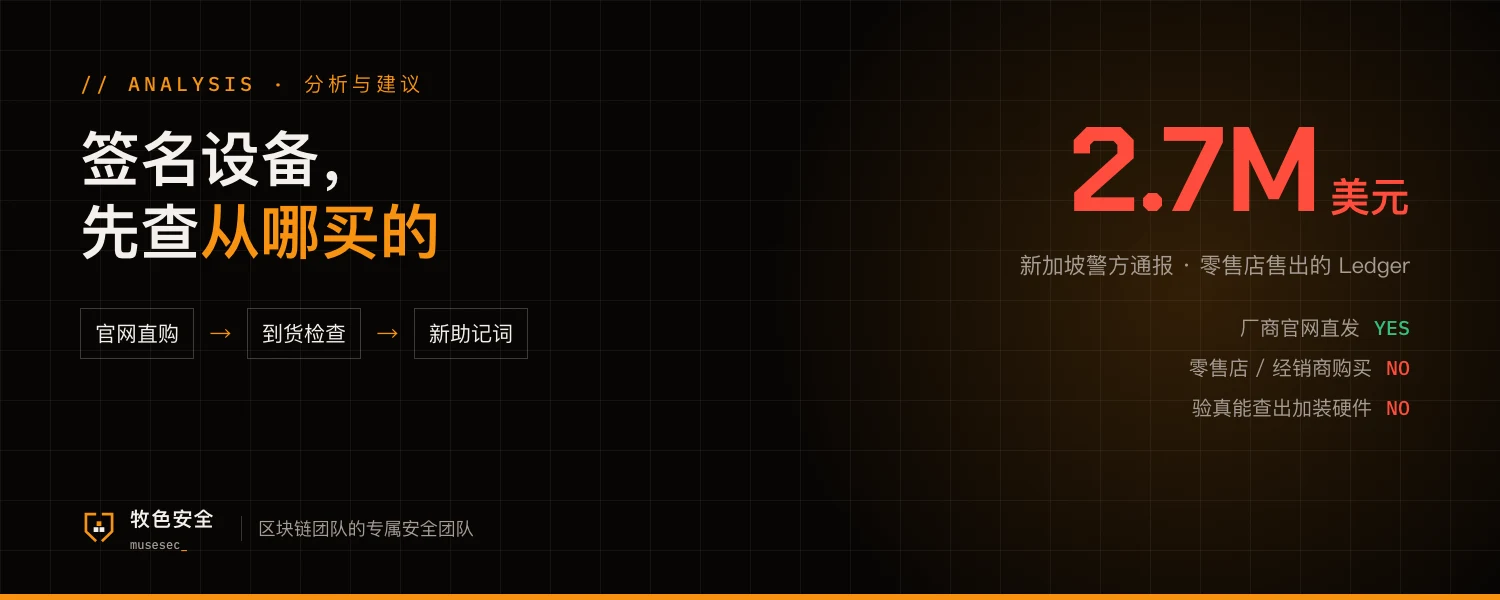
On October 28, the Singapore Police Force warned that Ledger hardware wallets purchased from some retail stores in Singapore contained malicious hardware components able to capture recovery phrases or private keys. At least two cases have been reported since September 10, with combined losses of about S$3.5 million (around US$2.7 million). Police say they are in contact with Ledger and investigations are ongoing.
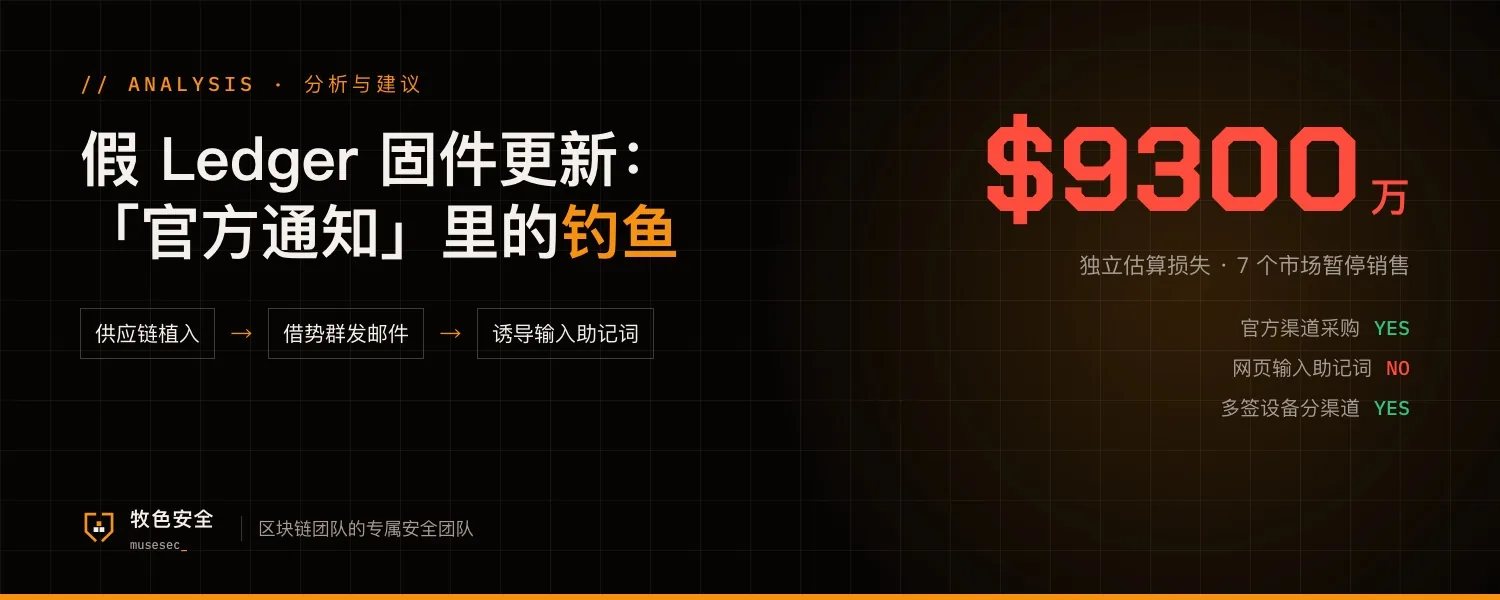
Earlier this month, Ledger confirmed an unauthorized implant in a device sold by the Malaysian reseller CryptoBilis, told that reseller to stop selling, and then asked resellers across Southeast Asia and Hong Kong to suspend sales. Ledger says the Secure Element and firmware were not modified, and its Genuine Check cannot detect hardware added alongside them. Third-party onchain estimates put related losses above US$86 million, which Ledger has not fully confirmed. Onchain tracking showed linked addresses still moving thousands of ETH into a mixer on October 29.
Where small teams are exposed
Process
Most teams have no rule on who buys signing devices or where. Staff pick them up on marketplaces, at airports or from resellers and expense them, and nobody checks the channel.
Risk
The device looks normal and passes the genuine check. The exposure happens at setup, when the recovery phrase is generated. Funds may be moved weeks later, which makes it hard to trace which device was the source.
Privileges
With a single-signature treasury, one bad device means all funds. In a multisig, two signers who bought from the same channel and batch can break the threshold together.
Four things you can do now
- Inventory every signing device: purchase channel, date and serial number. Anything not shipped directly by the manufacturer should stop signing; generate a new recovery phrase on a device bought direct and migrate the assets
- Write a procurement rule: signing devices are ordered only from the manufacturer's official store and shipped straight to the signer. Inspect packaging and casing on arrival; if anything looks off, do not power it on and hand it to your security lead
- Buy multisig signers' devices in separate batches through separate channels, and mix vendors where you can, so one compromised channel cannot take down the whole threshold
- Put onchain monitoring on all signer and treasury addresses with instant alerts for unexpected outflows, and write the migration runbook for a suspected tampered device in advance
Case count and losses come from the Singapore Police Force advisory. Ledger's confirmation and sales suspension come from Ledger's official statements; third-party loss estimates have not been fully confirmed by Ledger. Retailer names have not been officially confirmed and are left out. This article does not cover technical details of the implant.
Sources
- Singapore Police Force: Police Advisory On Tampered Cryptocurrency Hardware Wallets (2026-10-28) ↗
- Ledger Support: CryptoBilis investigation and sales stop ↗
- Ledger: reseller sales suspended in Southeast Asia and Hong Kong (2026-10-13) ↗
- BleepingComputer: Ledger confirms spy chip implant behind wallet crypto thefts ↗
- Fintech Singapore: Tampered Ledger Wallets Cost Singapore Crypto Users S$3.5 Million ↗
Also on X · Oct 29, 2026: View the original post on X ↗